When Map Data Becomes Executive Intelligence
Turning MAP Data Into Dealer-Level Accountability
Most brands collect MAP data. Far fewer use it to drive decisions at the leadership level. Alerts pile up. Dashboards get ignored. Enforcement stays reactive.
At MAP Services Corp, we see this pattern across industries. The shift happens when MAP data stops being noise and starts becoming clear, usable intelligence. That shift looks different depending on the business, but the core idea is consistent: data only matters when someone acts on it.
MAP violations are rarely random. Patterns usually trace back to specific dealers, regions, or inventory pressure. But raw alerts don’t show that. They only show activity.
A list of violations doesn’t tell you who is consistently undercutting pricing or why it keeps happening.
We works with brands to reorganize MAP data at the dealer level. Instead of asking “Where are violations happening?” the better question becomes “Who is driving them?”
When leadership can see repeat offenders, trends over time, and how violations connect to incentives or overstock, accountability becomes possible.
Conversations with dealers change. Instead of broad warnings, teams can point to clear, specific patterns.
For example, a regional manager reviewing a report of top violators over the last 90 days can prioritize outreach quickly. Instead of chasing every alert, they focus on the small group responsible for most issues.
That’s the difference between monitoring and managing. One creates awareness. The other drives change.
From Alerts to Insight
Brands deal with high volumes of listings across fragmented dealer networks. Alerts come fast, and they come often. The issue isn’t lack of data. It’s lack of clarity.
We often sees teams overwhelmed by volume, where every violation looks the same. Minor one-off issues get treated the same as chronic underpricing, and enforcement becomes inconsistent.
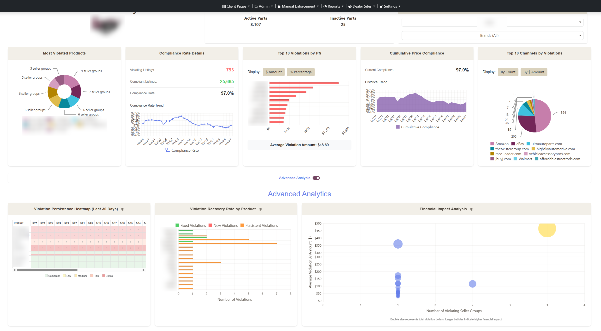
To make MAP data actionable, it needs context and our dashboard provides a myriad of ways to dissect your data. Identify trends, financial impacts and many other ways to get a clear picture of how your brand is being sold.
That means grouping violations, identifying severity, and highlighting patterns that require attention.
Instead of a constant stream of alerts, teams need structured insight. A weekly summary should answer:
- Which dealers are repeatedly violating MAP?
- Which products are most affected?
- Where are issues getting worse?
This is where MAP Services Corp focuses its reporting approach. The goal is to turn data into direction.
Teams stop reacting in real time and start planning ahead. Alignment improves across sales, compliance, and leadership because everyone is working from the same view.
Alerts are useful. Insight is what drives action.

Why Leadership Understanding Matters
In high-risk environments, where violations can quickly damage brand value or create legal exposure, the stakes are higher. Yet many organizations still rely on raw MAP alerts as their primary tool.
We consistently sees the same issue: alerts don’t explain themselves.
Leadership teams don’t have time to interpret spreadsheets or sift through hundreds of violations. If the data isn’t distilled into clear takeaways, it doesn’t get used.
And when it doesn’t get used, enforcement breaks down.
A useful way to frame it: alerts are inputs, not outcomes.
What leadership actually needs are answers:
- Are violations increasing or decreasing?
- Who is responsible for most issues?
- What actions have been taken, and what worked?
Without that layer of interpretation, even accurate data won’t improve enforcement.

Why Raw MAP Alerts Don’t Drive Better Enforcement
Many MAP programs stall at the same point. The data exists, but it never reaches the level where decisions are made.
This is where we emphasize structured analysis. When brands test different enforcement approaches or dealer communications, MAP data can reveal what actually improves compliance.
But that only works if the data is organized in a way that supports comparison.
Raw alerts can’t do that.
Organized intelligence can.
When MAP data is elevated from alerts to insight, it stops being a reporting function and becomes a strategic asset.
That’s when leadership pays attention.
And that’s when enforcement starts to improve in a measurable way.